In February, the temperatures start to rise into the 40s and 50s. People break out the jean jackets and put away the big coats. Homeowners open their windows to let in the fresh air. Snow in the yard starts to melt. And there’s always the one guy walking around in shorts.
But then, after a few days, the cold sets back in hard. That’s what we in the Midwest call “false spring.”
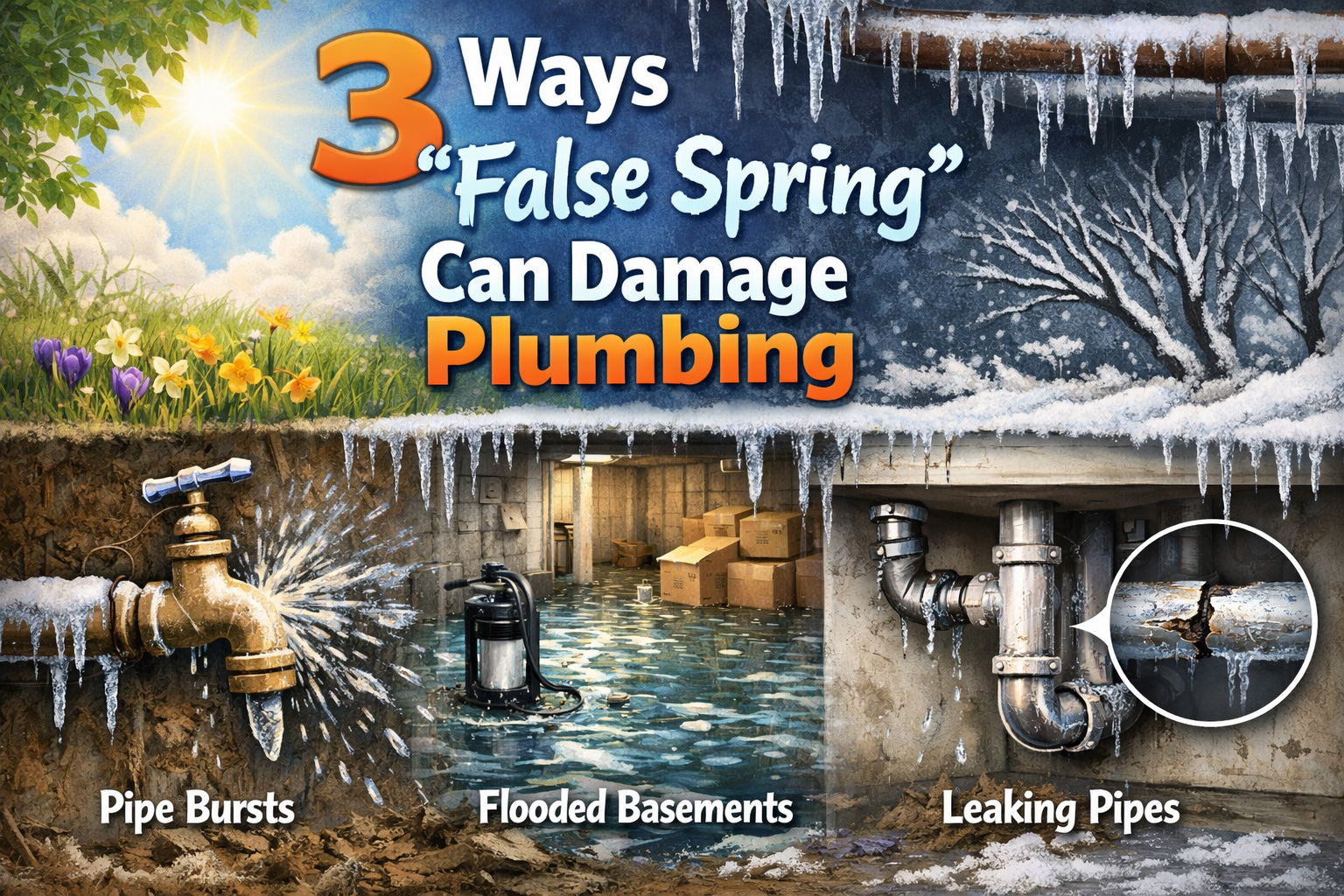
This thaw-and-refreeze cycle can actually be worse for plumbing than a steady cold.
Damage can be a combination of Mother Nature and homeowner behavior. Here’s what homeowners may do to unwittingly cause plumbing damage in a false spring.
- Lowering thermostats too much
- Reconnecting garden hoses too early and using those exterior spigots
- Opening crawlspace vents
- Shutting off basement heat
All of that, plus the thaw-and-freeze can work together to cause expansion, underground movement, drainage shifts, and more.
Reach out to your customers with offers for a “False Spring Inspection” that can include:
- Quick main drain check
- Sump pump discharge and verification
- Visual pipe inspection
- Exterior faucet inspection and shut off if necessary
Here’s what to look out for to keep your customers’ plumbing from taking a beating.
Stress on pipes
All of the melting can seep into cracks, crevices, and crawlspaces. That water can freeze, expand and ultimately cause stress to the pipes. But the damage can be insidious in that it doesn’t always result in a burst pipe. It can cause small cracks and stress to fittings that can get worse over time, or leaks that can go unnoticed until the damage is extensive.
It’s worth reaching out to your customers to offer an inspection, especially if their pipes are in crawlspaces, chilly basements or next to exterior walls.
Check:
- Pipes, including copper, PEX, and CPVC that are in crawlspaces or on exterior walls
- Hose bibbs and frost-free spigots outside
Main sewer lines
When the ground thaws, even if it’s a short thaw like we get in false spring, roots can start seeking that moisture. Your customers should be getting their main drains inspected every year, but it’s smart to do a quick inspection after a midwinter thaw.
Check:
- Older main drains to the street
- Slow drains that the homeowner might not have addressed
Sump pump overload
Residential sump pumps can really take a hit during false spring. The thaw can cause them to run at full capacity for the first time in many months, and then the refreeze hits.
Check:
- Overload on pump
- Valves
- Exterior termination points
- Blockages in discharge lines
Slow drains or reduced water pressure
If customers call with these problems, it might not be an issue with their pipes at all. False spring can cause damage to city pipes, too.
Neighborhoods can experience:
- Water main breaks
- Pressure fluctuations
A quick inspection of their plumbing and some investigative work can tell you if it’s a problem within their home or out in the neighborhood.
A plumbing check-up now can prevent emergency calls later. Getting ahead of the game can help your customers avoid burst pipes and other surprises!